NFTs Are Absolute Bullshit
NFT is the new bitcoin, the new blockchain, the new term abused by everyone to dress up the wildest ideas. A few years ago, buying skins in a video game was considered insane behavior, but today just say you sell NFTs and everything immediately takes on a futuristic veneer — a bit like a startup that runs a cinema’s ticketing system on blockchain.
What the hell is an NFT #
Let’s start with the basics: Non-Fungible Token. But what does fungible mean? Simply put, not replaceable. Unlike any cryptocurrency, where one BTC is equal and identical in value to another, an NFT is unique and is assigned to a specific public address that “certifies ownership”.
From a more practical standpoint, here’s one of my NFTs — a gift for signing up to the platform. A few lines of code.
"metadata":{
"description":"Commemorating the launch of the Crypto.org Chain and the blabla"
"name":"Crypto.org Genesis"
"dropId":"add71f250ac00440b8010abe6c616d16"
"image":"https://ipfs.io/ipfs/QmR22Hc6PCLHtm5YwiTCinj5a429qoiv6ehByieEx1T7TQ"
"mimeType":"image/jpeg"
}
The content is extremely clear: aside from some file type references, the most important part is the link to the content. Like any content on the web, the NFT is hosted on a physical machine that inevitably belongs to someone. This means the “visual” content is not in a distributed database (i.e., blockchain) but is stored somewhere outside, with the risk of being removed or altered.
The intellectual property fallacy #
NFTs are often touted as a way to protect intellectual property and copyright. The pitch goes: I create an NFT with a link to a work of my creation, sell it on OpenSea, and by doing so I transfer ownership of the work. There are two major problems with this approach:
- Verification that the seller actually owns the content.
- The buyer’s ability to claim ownership rights.
The first point is fairly straightforward: you’d need a regulatory body to verify that a given piece of intellectual property hasn’t already been registered on any blockchain or any other marketplace. Moreover, who guarantees that I own the right to sell it? If I sell an image posted on social media that has never been sold by anyone else, the person who created it — the original owner — could also create an NFT afterwards. Who would decide which one is the authentic “ownership certification”?
Point two is even more trivial. I, Bob, buy the NFT of a Pikachu drawing and decide to brag to my friends about my wealth. My friend Charlie is so envious that he copies the media and registers another NFT that, with a different key, points to identical content. Now we have two different NFTs pointing to two different content addresses, but the reproduced content is the same. The consequence is that on a service like Twitter, where you can set an NFT as your profile picture — which in some way “verifies” your ownership of it — both images will be considered authentic.
The magical world of the METAVERSE #
The metaverse is a fascinating concept — so fascinating that there isn’t a single definition of what it is. It was born from Facebook’s idea to push the social network into virtual reality, creating a kind of first-person video game using their headset. After the announcement of Meta’s development, everything became the metaverse — even ADIDAS has its own metaverse by now. At the moment, it’s all a giant soap bubble because every company that “jumps into” the metaverse does nothing but sell NFTs (i.e., multimedia content). But where is this supposed to lead? The basic idea is simple: in their virtual world, you’ll be represented by your avatar, which will need clothes and objects — so let’s start selling them to you now. But what’s the difference between buying items in a video game and NFTs in the metaverse? The answer is the blockchain.
Rather than having an internal database, the metaverse interfaces with the blockchain — and thus with your public address — to “certify” the ownership of items, perhaps sold by Nike. At the moment, this seems to be the only sensible way to use NFTs. But if tomorrow you broke some rules and Facebook decided to ban you and all your possessions, do you really think you’re safe just because they’re on the blockchain? It would be enough to simply exclude the recognition of specific items on Meta’s side, and you’d find yourself holding worthless strings.
Conclusion #
To sum up:
NFTs are not capable of guaranteeing or protecting intellectual property of any kind, given the absence of a regulatory body capable of making decisions.
NFT ownership offers no additional guarantees on the metaverse side compared to centralized systems.
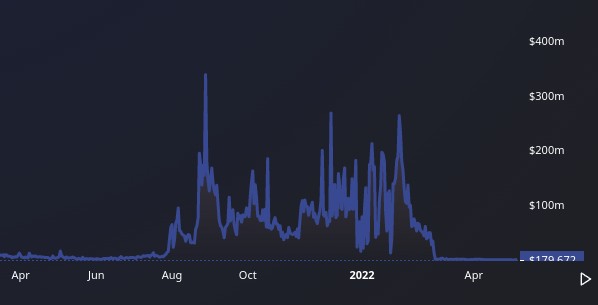
As further proof of this tool’s uselessness, on DefiLlama we can clearly see how, compared to the 2021 boom, NFT transaction volumes have shrunk at a frightening rate — as happens in the best bubbles of our time.